What Even *Is* Replacement Cost, Anyway? (And Why It’s Not Your Home’s Market Value)
Many homeowners here in California assume their home insurance should cover their property for what they could sell it for. That’s a common, understandable mistake. But it’s a mistake that can cost you hundreds of thousands of dollars after a fire or other disaster.
Here’s the truth: Your home’s market value and its replacement cost are two completely different beasts. Market value includes the land your house sits on. It factors in things like proximity to good schools, ocean views in Malibu, or the convenience of being near a freeway in the Inland Empire. Location, location, location.
Replacement cost, though? That’s strictly about the physical structure. It’s the cost to tear down what’s left and rebuild your house from the ground up, using similar materials and quality. It doesn’t care if you’re in Beverly Hills or Bakersfield. The cost of lumber, concrete, roofing, and skilled labor is the main driver.
Think about it: A small, older home in a prime Santa Monica location might sell for $2 million, but the house itself might only cost $500,000 to rebuild. On the flip side, a sprawling custom home in a less ritzy part of the Valley could cost $1.5 million to rebuild, even if its market value is “only” $1.2 million because the land isn’t as expensive. Insuring for market value means you’re either way over-insuring (and paying too much) or, more often, dangerously under-insuring the actual structure. Big difference.
The Rebuild Rollercoaster: Why California Replacement Costs Keep Soaring
Once you set your home’s replacement cost, you’d think it would stay pretty stable, right? Oh, if only. In California, construction costs are less like a stable number and more like a wild, unpredictable beast.
We’ve seen it time and again. After the devastating Camp Fire in Paradise or the Tubbs Fire in Santa Rosa, the cost to rebuild homes jumped 30%, 40%, even 50% in a single year. Why? A massive demand for limited resources. Everyone needs contractors, electricians, plumbers, and building materials all at once. Suddenly, a standard two-by-four costs twice as much, and finding a roofer in Ventura County after a major event becomes a Herculean task.
It’s not just disaster-driven spikes, either. We’re dealing with ongoing labor shortages across the state. Material costs — lumber, steel, concrete — have been volatile for years. Then there are the ever-evolving California building codes. New fire-hardening requirements, stricter seismic standards, energy efficiency mandates. All these improvements are good for safety and the environment, but they add to the rebuild price tag.
Which brings up something most people miss: Your policy needs to account for rebuilding *to current code*, not just replicating your old house. This isn’t just inflation; it’s a unique California phenomenon that makes accurate replacement cost estimates harder than ever.

Who Calculates This Magic Number? (Hint: Not Just Your Insurer)
Many people believe their insurance company just *knows* what their house would cost to rebuild. They’ve got the square footage, right? True, insurers use sophisticated estimating software, like Xactimate or Marshall & Swift, to crunch numbers based on local labor rates and material costs. But these are *estimates*. Good estimates, usually. But estimates nonetheless.
They don’t know about that custom-built kitchen island you designed, the rare imported tile in your master bathroom, or those expensive built-in bookshelves in your study. They can’t see the specific grade of finishes you chose or the intricate landscaping that would need replacing.
Your role in this isn’t passive. You need to be an active participant. Provide details. Photos, recent appraisals, receipts from major renovations. Don’t just sign off on a number your agent gives you. Ask questions. Challenge the assumptions. It’s your house, and ultimately, it’s your financial future on the line.
Extended Replacement Cost: Your California Safety Net
Some folks might look at “Extended Replacement Cost” coverage and think it’s just another way for insurers to tack on extra fees. Honestly, that’s not how it works in California. This coverage is often a lifesaver, especially here.
What is it? It’s an extra layer of protection, usually adding 20%, 25%, or even 50% *above* your dwelling coverage limit. So, if your home is insured for $600,000, and you have 25% Extended Replacement Cost, your actual coverage could go up to $750,000.
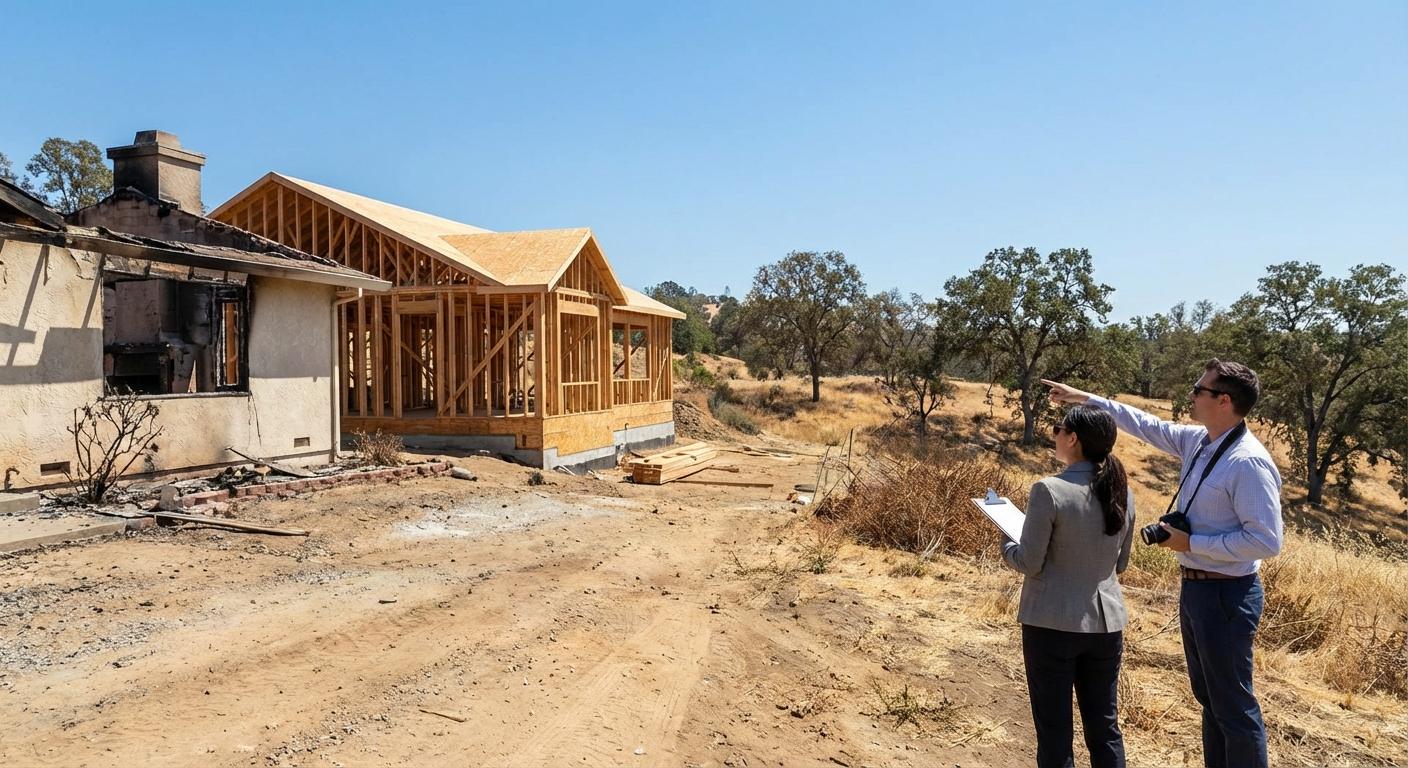
Why is this essential in California? Imagine a widespread disaster. Let’s say, a significant fire rips through a community in the foothills of the Sierra or along the coast in San Luis Obispo County. Suddenly, thousands of homes need rebuilding. The demand for contractors and materials explodes. Prices skyrocket. That $600,000 home might now realistically cost $800,000 to rebuild due to the surge in costs. That extra 25% or 50% from your Extended Replacement Cost coverage can be the difference between rebuilding your home and being financially devastated.
Many major insurers operating in California, like State Farm, AAA, and Farmers, offer some form of this. It might have a slightly different name depending on the company, but the purpose is the same: to protect you from those unpredictable cost spikes. It’s not just a “nice to have”; it’s a must-have for peace of mind in a state prone to natural disasters.
The “Just Get the Cheapest Policy” Trap (And What About the FAIR Plan?)
It’s tempting to think all home insurance policies are pretty much the same when it comes to covering your home’s replacement cost. You just pick the cheapest one, right? Wrong. Not even close.
Different policies offer varying levels of protection, especially around replacement cost. Some have more generous extended replacement cost options. Others might have better provisions for code upgrades—meaning they’ll pay more to bring your rebuilt home up to current building standards, not just replace what was there. Some policies might even offer guaranteed replacement cost, though those are becoming rarer in California.
Then there’s the California FAIR Plan. This isn’t a typical insurance company. It’s California’s “insurer of last resort.” If you live in a high-risk area—say, parts of the Santa Clarita Valley or the hills of Ventura County—and no private insurer will cover you, the FAIR Plan steps in. It’s a lifeline, no doubt.
But here’s the thing: The FAIR Plan’s coverage is often basic. Its replacement cost limits can be more restrictive, and it typically doesn’t offer the kind of extended replacement cost coverage you’d find with a private carrier. You often need to buy a separate “Difference in Conditions” (DIC) policy from a private insurer *on top* of your FAIR Plan policy to get broader coverage, like liability or theft. This gets complicated fast, and it’s definitely not the “cheapest and easiest” option. It’s a stop-gap, not a long-term solution for comprehensive replacement cost protection.
Your Agent Isn’t a Mind Reader (But They’re Your Best Ally)
It’s easy to assume your insurance agent handles absolutely everything, and you don’t need to sweat the numbers. While a good agent will certainly guide you, Karl Susman at Best Insurance Rates Los Angeles (CA License #OB75129) can’t magically know every detail of your home’s unique construction or your recent kitchen remodel. You need to be an active participant in this process.
An experienced agent can explain the complexities of replacement cost, help you work through the estimating process, and find the right policy that fits your specific needs and budget. They’re your guide through the ever-changing California insurance landscape, including the impacts of things like Prop 103 and recent insurer pullbacks. They’ll ask the right questions and push you to consider those “what if” scenarios that could leave you underinsured.
If you’re unsure about your current coverage, or if you’re feeling lost trying to figure out your home’s true replacement cost, don’t guess. Talk to an expert. You can reach Karl Susman at (877) 411-5200 or get a quote online today. Get a California Home Insurance Quote.
Don’t Get Caught Underinsured: A Final Thought
Being underinsured in California is a risk no homeowner should take. With construction costs constantly climbing, new building codes always coming into play, and the ever-present threat of wildfires or other natural disasters, ensuring your home’s replacement cost is accurate isn’t just a recommendation—it’s a necessity. Don’t wait until disaster strikes to find out you’re short on coverage. Understand your replacement cost now. Click here to get a quote and review your options.
Frequently Asked Questions About California Replacement Cost
Is replacement cost the same as actual cash value?
No, they’re very different. Replacement cost pays to rebuild your home with new materials, without deducting for wear and tear. Actual cash value (ACV) deducts for depreciation, meaning it pays what your old roof or appliances were worth *at the time of the loss*, not what they cost new. For your dwelling, you almost always want replacement cost.
How often should I review my home’s replacement cost?
You should review it annually with your agent, especially before renewal. Also, review it immediately after any major renovations, if you add square footage, or if there’s been a significant natural disaster in California that could impact local construction costs.
What if I can’t afford the “full” replacement cost estimate?
This is a tough spot many Californians face. While it’s critical to insure for as close to 100% of replacement cost as possible, discuss your options with your agent. They might be able to help you find a policy with the best extended replacement cost options or explore specific deductibles that can make premiums more manageable while still providing a strong safety net.
Does my policy cover code upgrades if I have to rebuild?
Many standard homeowner policies include some coverage for “Ordinance or Law” or “Code Upgrades.” This pays for the additional costs of bringing your rebuilt home up to current building codes, which can be significant in California. Make sure you understand how much coverage you have for this.
Can I get help calculating my home’s replacement cost?
Yes! Your insurance agent, like Karl Susman at Best Insurance Rates Los Angeles, is the best resource. They use industry-standard tools and local knowledge to help estimate. You can also consult independent appraisers or contractors who specialize in construction cost estimates, especially if your home has unique features.
This article is for informational purposes only and does not constitute financial advice.